Lady Zia Wernher School
Objects of Reference
Objects of reference are tangible items used to support communication. These objects serve as concrete symbols to represent specific activities, places, or concepts, helping to bridge the gap between abstract language and understanding.
For example, a spoon might be used as an object of reference for mealtime, or a piece of fabric for getting dressed.
By associating these objects with particular routines or messages, individuals can better anticipate and comprehend what is expected of them, thus enhancing their ability to express needs and make choices.
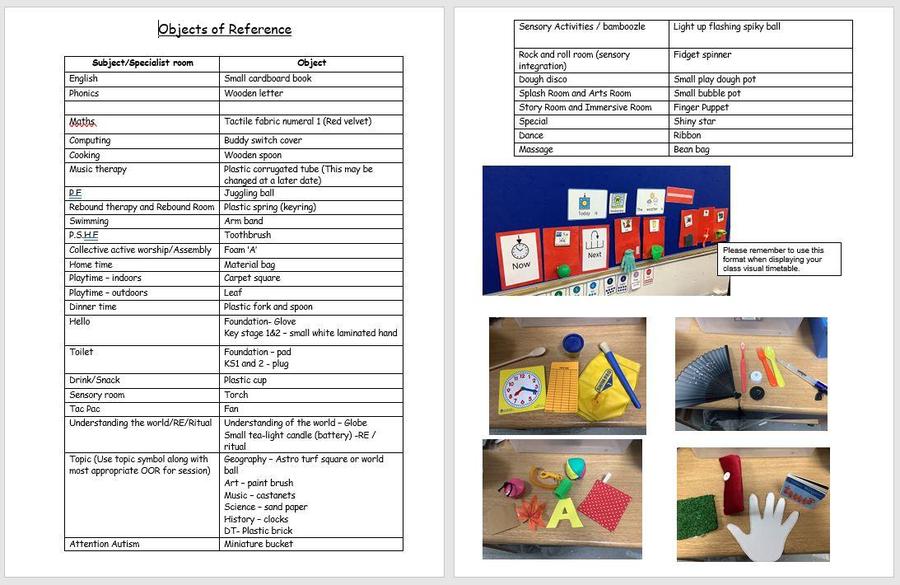
Our curriculum objects of reference
Object exchange communication for children is a method used to help individuals express their needs, wants, and thoughts using tangible items or pictures instead of spoken words.
Object exchange communication involves giving, looking at or showing an object (or a picture of it) to represent a message. For example, a child might hand over a cup to indicate they want a drink. Over time, this can evolve into using pictures, symbols, or even digital communication tools.
Key Benefits
- Encourages intentional communication
- Reduces frustration and difficulties caused by communication barriers
- Builds a foundation for language development
- Promotes independence and social interaction
How It Works
- Start with real objects
Use familiar and motivating items like a prefered toy or snack (maybe within a clear choice jar, basket or similar). The child learns that giving/grasping the object/or container to an adult results in getting what they want. - Move to object symbols or photos
Replace real items with small representations or photos of those objects. - Introduce picture symbols or cards
Use systems like PECS (Picture Exchange Communication System), where children exchange pictures to communicate. - Expand vocabulary and sentence structure
Gradually teach combinations like “I want + [object]” using multiple symbols.
Practical Tips
- Keep sessions short and positive.
- Always respond immediately to the child’s exchange to reinforce communication.
- Use consistent symbols and clear visuals.
- Involving family members and school memebrs for consistency across all environments, will create the best outcomes.
Example Activities
- Snack time exchange: The child gives a picture of a banana to receive one.
- Toy choice board: The child selects a picture of a car or ball to choose a play activity.
- Daily routine chart: The child uses object symbols to indicate what comes next (e.g., brushing teeth, reading time).
This approach helps children understand that communication is powerful and meaningful, setting the stage for more advanced language and social skills.
Example of our objects of reference.
-
Objects of referenceThis video gives guidance and information of how you may use objects of reference to support communication skills.