Lady Zia Wernher School
Visual Timetables
Visual timetables can be an invaluable tool in supporting children's communication skills, particularly for those who may struggle with verbal communication.
By presenting daily activities or routines in a visual format, these timetables provide a clear and structured way for children to understand what is expected of them, reducing anxiety and enhancing their ability to express themselves.
The use of objects of references, photos or symbols, associated with specific tasks, activities or events can help children to better comprehend and anticipate their day, allowing them to communicate their needs and feelings more effectively.
Additionally, visual timetables can encourage independence as children learn to follow the sequence of their day, and they can be a bridge for children to learn new vocabulary associated with their activities.
Overall, visual timetables not only aid in communication but also foster a sense of stability and confidence in children as they navigate their daily lives at school, home and in the wider community.
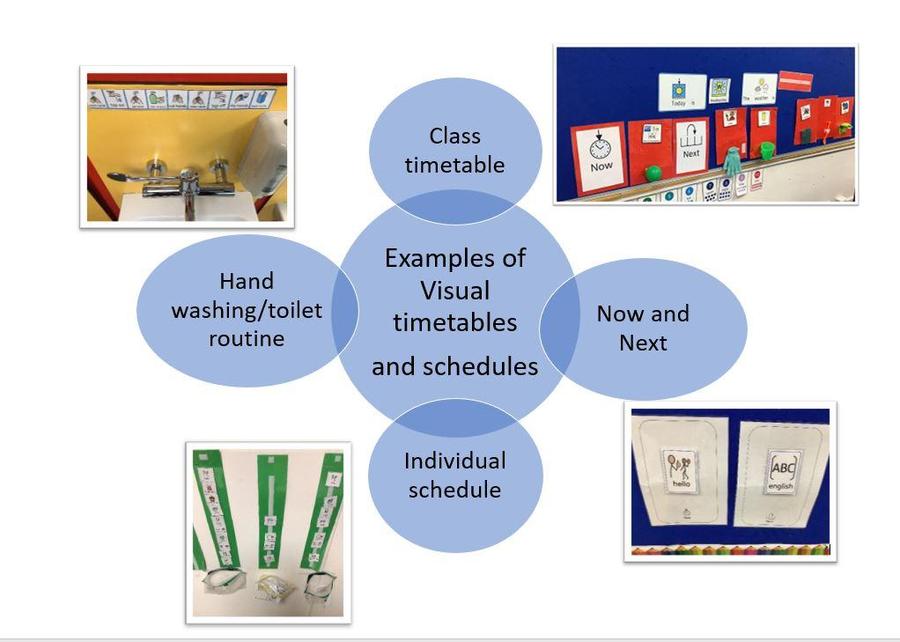
In this image you can find examples of various types of visual timetables/schedules.
Now and Next
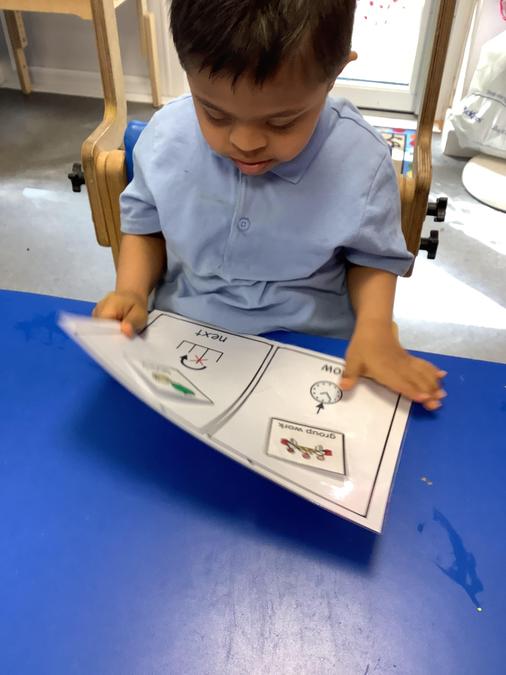
A "Now and Next" visual schedule is an effective tool for helping children, particularly those with autism or other special needs, understand and manage their daily routines. By providing a clear and predictable framework, it can help reduce anxiety and support transitions between activities.